I turn flexible work initiatives into measurable economic value. Discover how much hidden salary you may be paying—without even realizing it.

INTERVIEW ABOUT THE MIDDLE EAST CRISIS AND ITS IMPLICATIONS FOR CEO'S
Interview with Dr. George Monray to Dr. Mario Weitz (World Bank)
News
3/18/20264 min read
INTERVIEW
Middle East Crisis and Its Implications for CEOs
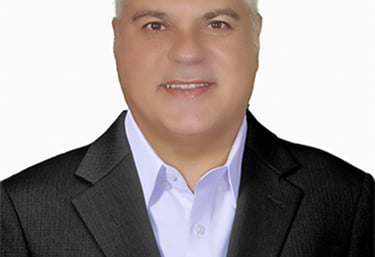
Interview by Dr. George Monray
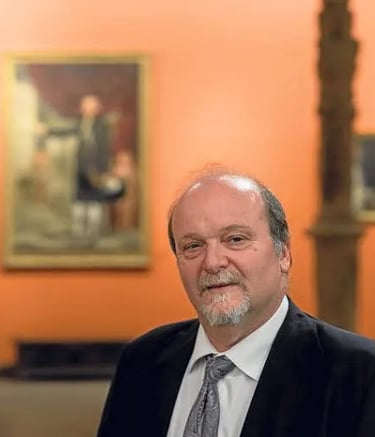
Guest: Dr. Mario Weitz
World Bank Consultant and Professor of Economics. Former Advisor to the International Monetary Fund
With extensive international experience linked to the IMF, the World Bank, and Banco Santander, he has established himself as a leading expert on global economics, geopolitics, and international markets. With over two decades of teaching experience at ESIC and broad experience as a speaker in Latin America and Europe, he provides clear analyses of the economic environment, global trends, and their impact on businesses and banks.

March 18, 2026
Middle East Crisis and Its Implications for CEOs
Strategic Interview Brief
Interview by Dr. George Monray
Guest: Dr. Mario Weitz
World Bank Consultant and Professor of Economics
Executive Context
Global geopolitical tensions are reshaping supply chains, industrial strategy, and energy markets. For corporate leaders, understanding the potential consequences of international conflict and economic fragmentation has become essential for strategic planning.
In this interview, Dr. Mario Weitz discusses the most likely geopolitical scenarios, their economic consequences, and the strategic implications for CEOs responsible for investment decisions, industrial location, and supply-chain resilience.
Conflict Scenarios and Supply-Chain Risk
JM: What is the most likely conflict scenario and what is the time horizon? A CEO wants to know which suppliers could fail first.
MW: The most critical industrial risk scenario would be a possible Chinese invasion of Taiwan. Such a conflict would create a severe disruption in global supply chains, since a large share of the world’s microprocessors and advanced chips are produced in that region and in Vietnam.
From a military perspective, there is also ongoing pressure related to the possibility that Russia could attack countries such as Poland. In such a situation, Europe would depend entirely on support from the United States.
For business leaders, the implication is clear: supply-chain concentration in strategic technologies remains a major systemic risk.
European Competitiveness Under Energy Pressure
JM: Which European sectors would lose competitiveness if energy prices rise significantly? Europe has more expensive energy than the United States or Asia. What would be the impact on sectors such as chemicals, steel, fertilizers, automotive, or transportation?
MW: Europe is gradually losing ground compared with the United States and China. The lack of investment combined with high energy costs—partly driven by political resistance to fracking and nuclear power—has weakened European industrial competitiveness.
One proposed solution is reindustrialization: bringing manufacturing capacity back from Asia. However, the central constraint is financial. Governments lack the fiscal capacity to provide the level of subsidies required to compete with industrial policies in the United States or China.
Industries most at risk of relocation, or those requiring urgent strategic support, include:
Microprocessors and semiconductor production
Defense manufacturing
Artificial intelligence technologies
Energy sustainability industries
Without targeted policy support, these sectors could migrate toward regions with lower energy costs and stronger industrial incentives.
Business Opportunities Emerging from the Crisis
JM: What business opportunities could arise from the crisis? Who are likely to be the winners? Is this the moment to invest in companies linked to NATO and European rearmament?
MW: The most obvious global winner is the defense sector. Rising geopolitical tensions are already accelerating military spending across many regions.
In addition, critical minerals—particularly lithium and copper—have strong medium-term growth prospects. Latin America, especially Argentina, Bolivia, Chile, and Peru, will play a crucial role as major production hubs.
Another transformative driver is artificial intelligence, which will reshape productivity, industry, and geopolitics.
In the area of energy and storage, green hydrogen is emerging as a promising future energy carrier due to its capacity for storage and transport. However, the investments required are large and profitability may take five to six years to materialize.
Finally, infrastructure investment will expand significantly. Water systems, energy networks, and digital infrastructure—particularly data infrastructure—will require substantial capital in the coming decade.
Europe’s Energy Landscape in Five Years
JM: What will the European energy landscape look like in five years?
MW: Europe’s future energy model will likely involve a moderate green transition rather than a radical one. Renewable sources such as solar, hydro, and wind will remain essential, but they will need to be complemented by nuclear energy to guarantee system stability and low carbon emissions.
Within five to six years, green hydrogen could become a significant component of the energy system due to its storage capacity.
However, there is increasing criticism of what some analysts describe as radical environmental policies in Europe that reject fracking. It is worth noting that fracking allowed the United States to become an energy exporter and significantly increase its energy independence.
Geopolitical Winners and Losers
JM: Which countries will emerge stronger and which weaker? This is a key concern for international companies and CEOs.
MW: The major powers likely to remain dominant are the United States and China, largely because of their leadership in artificial intelligence and technological innovation.
In Asia, several countries show strong economic potential:
Singapore, widely considered one of the best places in the world to do business
Vietnam, often described as “the small China” due to its manufacturing expansion
South Korea
India
Latin America may also strengthen its geopolitical position due to its control of strategic minerals essential for the energy transition.
Europe, by contrast, faces a more difficult position. It currently experiences both geopolitical and economic pressure, situated between U.S. military dominance and China’s technological competition.
Strategic Investment and Industrial Location
JM: What will be the key decisions regarding investment and industrial location?
MW: The emerging trend is toward reindustrialization in Europe, particularly in strategic sectors such as semiconductors. The objective is to reduce dependence on Asian supply chains and avoid disruptions in the event of geopolitical conflict.
Future investment decisions should prioritize sectors that combine:
Industrial productivity
Job creation
Technological innovation
Key areas include:
Water infrastructure
Energy systems
Defense industries
Artificial intelligence technologies
However, one structural constraint remains: the high level of global public debt. This limits the ability of governments to finance large-scale industrial transitions, making private investment and public-private partnerships increasingly important.
Strategic Takeaway for CEOs
For corporate leaders, the current geopolitical environment requires a reassessment of long-term strategy. The major priorities emerging from this analysis include:
Supply-chain diversification
Strategic investment in critical technologies
Greater attention to energy costs and energy security
Monitoring geopolitical risk in Asia and Eastern Europe
Companies that adapt early to this evolving global landscape will be better positioned to navigate the coming decade of geopolitical and industrial transformation.

